Wasps · 2 min read
Why Wasps Become So Pushy in Late Summer
Hardly a wasp in sight in May, then dozens around the picnic table in August. The reason lies in how a colony expands, peaks and then fades each year.
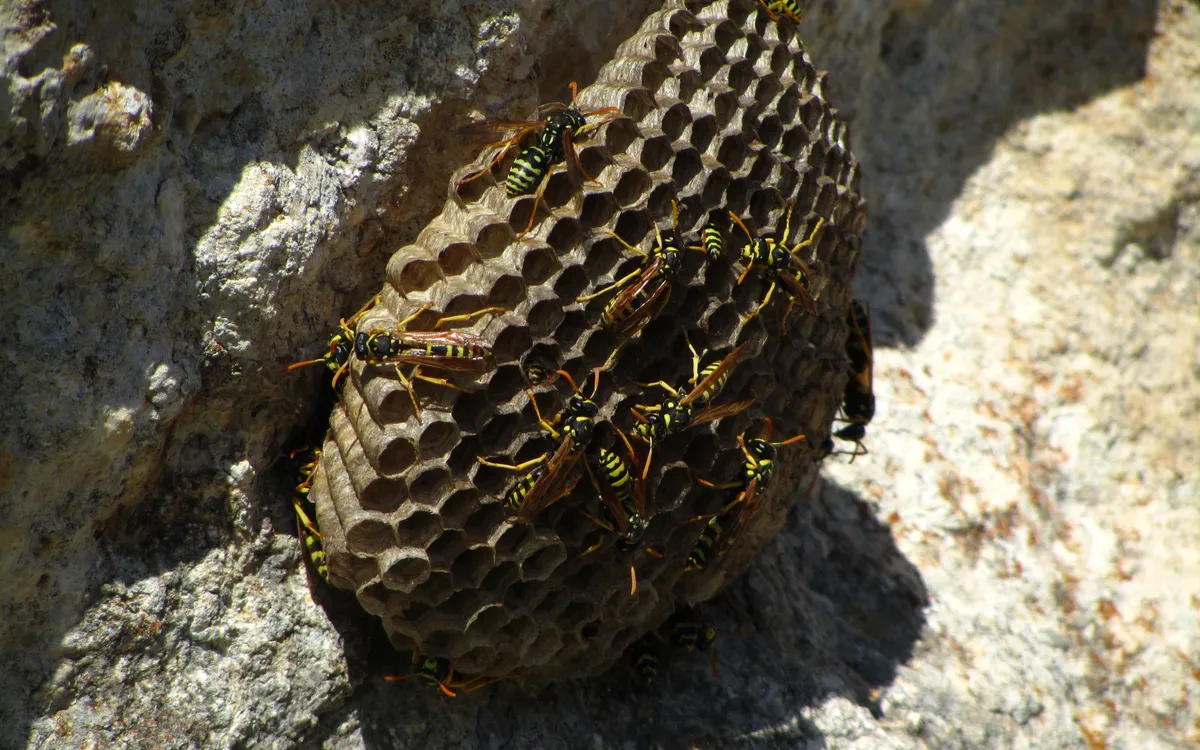
The wasps buzzing around your drink in late summer all trace back to a single queen who woke up months earlier. Once you see the seasonal pattern, it becomes obvious why timing is so important when dealing with a nest.
Spring: one queen starts from scratch
After winter hibernation a mated queen emerges in warm weather and looks for a dry, sheltered spot such as a loft, shed, hollow or old burrow. She scrapes wood, chews it into pulp and builds a small paper nest. The first brood becomes her workforce. A nest is never reoccupied the following year, even if it stays intact.
Early summer: the workers take over
Once the first workers emerge, the queen concentrates on laying while her daughters build and forage. They catch flies, caterpillars and other insects to feed the larvae, so in these weeks wasps do the garden a favour. The nest is also at its smallest, which makes treatment simplest.
Late summer: huge numbers, and a sudden sweet tooth
By August a nest can hold thousands of wasps. The queen starts laying future queens and males, and the larvae produce less of the sugary secretion that adult workers rely on. Short of sweet food, the workers look for it elsewhere, which is why they crowd around ice cream, juice and fruit, and why they seem so irritable.
Autumn: the colony starts to collapse
Young queens mate and leave to find somewhere to overwinter, and the males die shortly after. Back at the nest, food supplies dwindle and the remaining workers wander further, often becoming bolder around bins and outdoor tables.
Winter: the young queens carry on alone
The old queen and the workers die as temperatures drop. Only the new mated queens survive, tucked into log piles, wall gaps and loft spaces, ready to begin again in spring.
Putting this to use at home
- Check the loft, shed and garage in spring for small new nests
- Close gaps around the roofline before queens settle
- Get a nest treated early instead of waiting for late summer
- Cover sugary food and drinks outdoors from July onwards
- Do not worry about an empty old nest, as it will not be used again
If you find an active nest at any stage, our guide to what to do about a wasp nest sets out the safe options, or you can ask our Acton team about a fixed-price wasp treatment.